×

The Standard e-Paper
Fearless, Trusted News
 The Standard Group Plc is a
multi-media organization with investments in media platforms spanning newspaper
print operations, television, radio broadcasting, digital and online services. The
Standard Group is recognized as a leading multi-media house in Kenya with a key
influence in matters of national and international interest.
The Standard Group Plc is a
multi-media organization with investments in media platforms spanning newspaper
print operations, television, radio broadcasting, digital and online services. The
Standard Group is recognized as a leading multi-media house in Kenya with a key
influence in matters of national and international interest.

Audio By Vocalize

Nairobi Governor Johnson Sakaja has called on the Senate to strengthen and fully operationalise laws governing land rates collection, arguing that the capital city has the potential to increase its annual own-source revenue from the current Sh13.8 billion to as much as Sh63 billion.
Appearing before the Senate County Public Accounts Committee (CPAC), Sakaja said Nairobi had nearly doubled its revenue collection over the last four years, rising from Sh8 billion to Sh13.8 billion.
However, the Governor noted that the county continues to lose billions of shillings due to weak enforcement mechanisms against land rates defaulters.
“The main source of untapped revenue is land rates. If you owe the Kenya Revenue Authority (KRA), they will come for you, but counties do not have similar enforcement powers. Unless counties are properly facilitated by law to enforce collections, it will be impossible to realize our full revenue potential,” Sakaja told Senators.
The Governor pointed to the National Rating Act, 2024, saying its effective implementation could unlock billions in additional revenue for Nairobi. He noted that only about 20 per cent of Nairobi’s 256,000 registered property owners regularly pay land rates, leaving more than 200,000 properties in arrears.
According to Sakaja, many of the chronic defaulters are influential individuals and institutions, while small traders and ordinary residents continue to meet their tax obligations.
“The challenge is ensuring that everyone pays, not just the mama mboga. How do we compel those who have not paid and yet hold positions of influence? We need stronger laws that will ensure compliance across the board so that everyone contributes fairly and the county is able to provide services to all residents,” said Sakaja.
The Governor argued that with stronger enforcement provisions and support from Parliament, Nairobi could generate up to Sh63 billion annually, significantly reducing dependence on national government allocations while improving service delivery across the city.
Sakaja also addressed concerns raised by the Auditor-General regarding discrepancies between funds reflected in Nairobi County bank accounts and amounts captured in the county’s digital revenue collection system. He explained that all county revenue streams had been digitized and that the county no longer accepts cash payments.
“There are instances where customers deposit money directly into county accounts before visiting our customer service centres to indicate what the payments are for. It would be a concern if the system reflected more money than what is in the bank. In this case, however, the bank balances are higher because some payments are yet to be reconciled within the system,” said Sakaja.
The Governor defended the county’s Nairobi Pay digital revenue collection platform, telling senators that the system has significantly improved revenue collection and could serve as a model for other counties across the country.
The Governor said that Nairobi Pay was developed through a government-to-government procurement arrangement and is owned by the Government of Kenya. He explained that the platform was branded “Nairobi Pay” to make it easy for residents to identify and use when paying for county services.
“This is one of the best systems I can recommend. It enables us to track revenue from all collection streams in real time and has played a major role in increasing Nairobi’s revenue from Sh8 billion when we took office to Sh13.8 billion in the financial year ending June 2025,” Sakaja told the committee.
The Governor said the system had helped eliminate inefficiencies associated with previous platforms and enhanced accountability through digital payments. He noted that Nairobi Pay had proven more effective than earlier systems and welcomed scrutiny from the Auditor-General.
“It is good for the Auditor-General to compare the systems. They will find that Nairobi Pay is far superior to what existed before. We are comfortable with it because it has strengthened digital revenue collection and reduced leakages,” said Sakaja.
Stay informed. Subscribe to our newsletter
The Governor further revealed that other counties, including Nyandarua, had already adopted the platform, adding that it could help counties struggling with low revenue collection improve their performance.
Machakos Senator Enoch Wambua said that if the system’s effectiveness is confirmed through the audit process, the Senate could recommend its adoption by other county governments as a way of sealing revenue leakages.
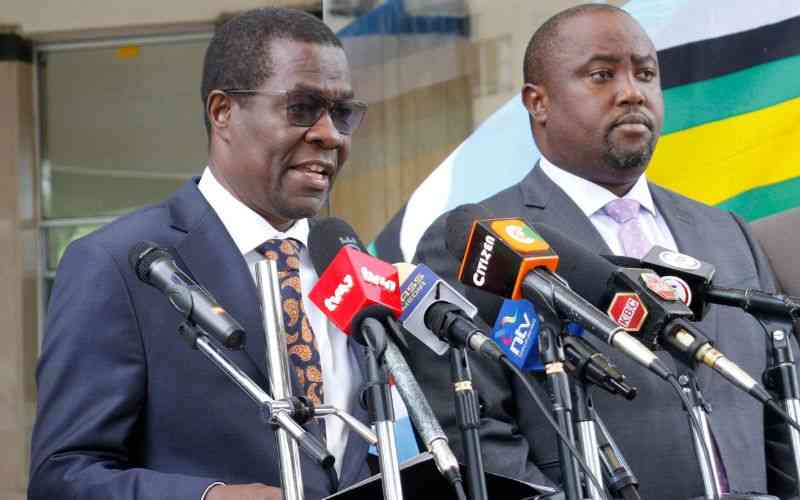
Committee Vice Chairperson Johnes Mwaruma, who chaired the session on behalf of the committee chair, directed Nairobi County to provide additional information on the acquisition and effectiveness of the system.
The committee recommended that the county be given 14 days to respond to the concerns raised and demonstrate the platform’s value before further recommendations are made.






Subscribe to our newsletter and stay updated on the latest developments and special offers!







 join
join